Dear Me In 2012,
You are two years into your marriage and people are starting to ask when you and Ian are going to have children. You're wondering the same thing, but you're nervous about how a child would encumber your lives. You think that "having children is the denoument of the slide into adulthood known as 'settling down.'" You're worried you'll regret it.
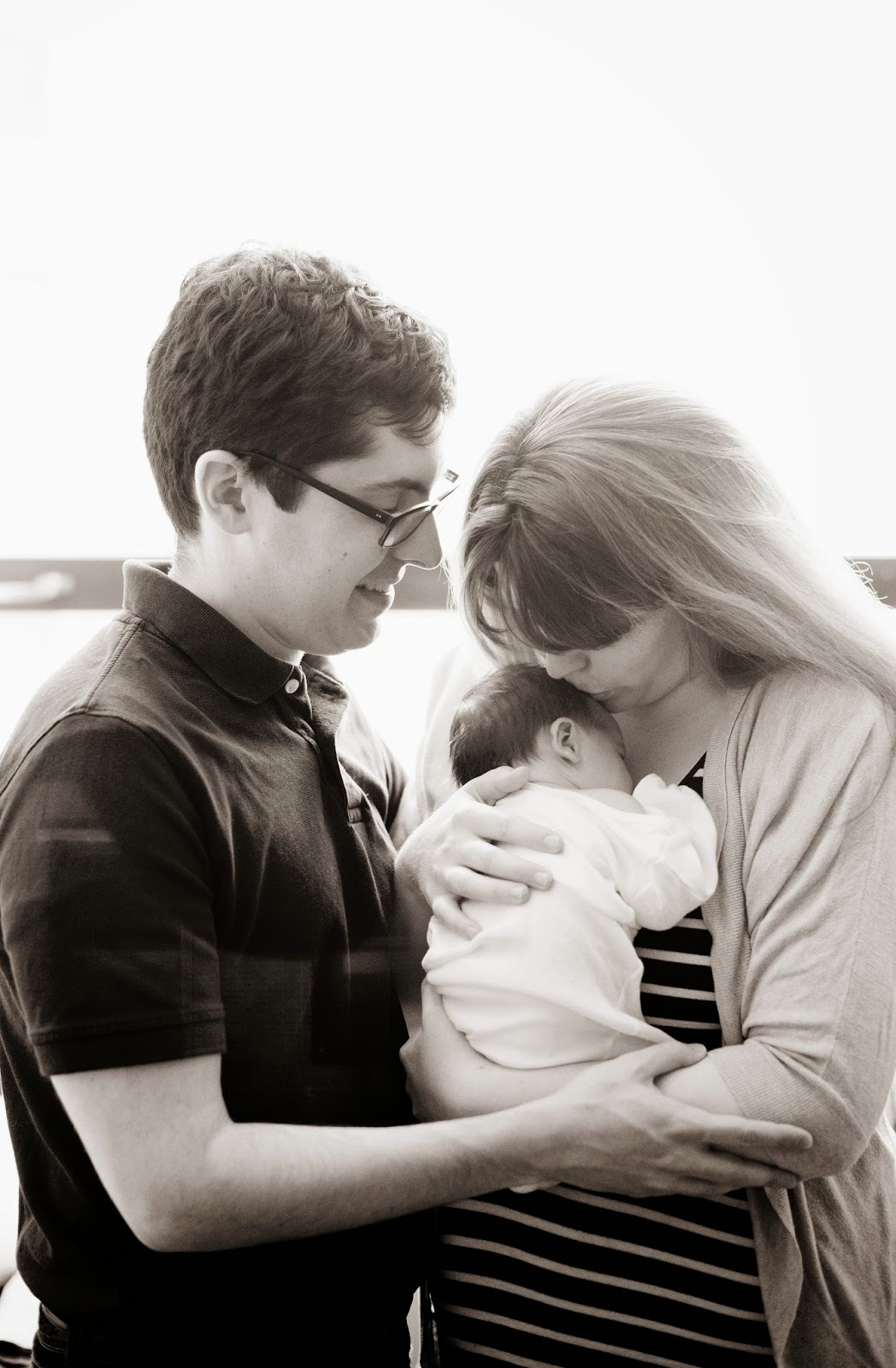
I'm writing to you from three years in your future. You have a 17-month old. You have stretchmarks and a scar on your belly, pediatrician's bills in your filing cabinet, and an early wakeup call everyday. And you have no idea how you could have ever thought you would regret this.
You're worried about parenthood limiting your wanderlust. No more chats about spending three weeks in Munich or joining the Peace Corps. As of today, your passport has been expired for three years and your fear of flying has little to do with turbulence, and more to do with flying with a cranky baby. (And a carseat. By yourself. True Story.) You like traveling less than you used to. You feel lucky to love being at home.
Plus, you get to visit the remote island nation of James everyday, which is more exotic than any place you've ever pinned on Pinterest. The unique inhabitant of this island has weird customs like throwing food, waking at odd hours, and shrieking at the slightest sensation of any emotion whatsoever. Jamesland is fascinating.
I wish that you would redirect your concerns about world exploration to your friendships because having a baby is going to be a huge shock to all of the relationships in your life. Happily, you are going to make some amazing new friends through James. Nascent as these friendships may be today, when you watch James swing in tandem with a music class friend or steal cheerios from a toddler whose mom you met in birth class, you will silently hope that you'll get to watch these babies grow up together.
But having a baby will be also be an unexpected test on your old friendships. Getting pregnant at 28 means that, of all the friends in your wedding photos, you and Ian will be the first ones to become parents, and that's tough sometimes. You'll feel guilty when you realize it's been two months since you reached out to a friend, when it feels like it's been two weeks. You'll feel isolated when your girlfriends can't sympathize with your frustration at a woman who complained to you about her coworkers leaving work at 5:30 to pick up their kids from daycare when "I have a yoga class at 5:30!"
And you'll feel sad for the friends you start to lose touch with. The initial phone calls of excitement give way to fewer get-togethers and unanswered texts. You'll hope that they still think of you as the same person that you were before James. But your schedule and priorities are different now, so perhaps they think you've changed. They're not wrong.
Most of all you'll feel grateful for your friends. They will bring you doughnuts in the hospital and Chipotle in those bleary first few weeks home; and they'll buy James books and onesies and ask to hold him even though "I don't know what I'm doing!"; and they will still invite you and Ian out to dinner, even though they know you need way more forewarning nowadays. You'll hope that you will someday get to repay the tremendous kindness that your friends have shown you, and you'll want to thank them in a blog post for making you feel like the same version of yourself even in the middle of a huge life change.
Of course, you hate change; you love routine. You've always been a "love-you-have-a-good-day" kind of gal. So introducing precious sweet 8lbs 15 oz angel baby James into your life is going to S-U-C-K at first. But, as it turns out, babies love routine, too. So you'll find your groove again right away, and you'll find comfort in the 7pm bath-book-boob-bed routine with James and the quiet time on the couch with Ian every evening.
Other things will change, too. You'll be more self confident. You won't mind your stretchmarks because of the miracle they represent. Your marriage will get stronger and, the biggest surprise of them all: you'll have better sex, likely for a few reasons: because you're more confident; because you appreciate alone time with your husband like never before; and because nothing's quite a sexy as seeing the man you love jump out from behind the couch just to make the little boy you love laugh.
In the months before James' birth, someone close to you will tell you that it's totally normal to bring him home from the hopsital and think, "I've made a huge mistake." That happens. You will look at your days-old bundle of joy, swaddled in those adorable Aden & Anais muslin blankets, perfectly asleep in his crib, and you will see him as a ticking time bomb that will explode into a fit of wailing five minutes after you've dozed off. You'll dread the possibility of him getting sick because then he might really cry non-stop.
After a couple of weeks, you'll reflect on those thoughts and newly believe that there is nothing powerful enough in this world that could keep you from being the one to comfort James if he ever got sick. Your love for him will be the most beautiful, primal feeling you've ever experienced, completely unparalleled in your life.
In thinking about having children, you hypothesized that "when you sacrifice for love... it just feels like the right decision." You're not wrong, but those words don't sound right to me anymore:
Parenting James isn't a sacrifice; it's a blessing.
When I'm rocking James to sleep in the evening, and I look at his peaceful face as the shadows roll back and forth across his soft cheeks, I think about Time. God willing, my baby will grow old one day, and Time will crease those cheeks with wrinkles and stiffen the little fingers resting sweetly on my chest. When he's old and gray and I'm not there, will someone rock him gently? Will they comfort him when he can't sleep, and stroke his hair tenderly, and pull his blanket up to keep him warm? In those moments, I'm reminded that the real sacrifice in parenthood is the beautiful fragility in wondering if anyone could ever love James as much as I do.
Showing posts with label Pondering. Show all posts
Sunday, October 18, 2015
Saturday, September 13, 2014
Thoughts on a C-Section
When James wakes up from his nap, I’m going to give him a big kiss on his chubby cheeks and place him snug on my hips. My big ole’ birthing hips. Except those hips didn’t birth him. He came out of a 7-inch incision on the underside of my belly. I see that scar everytime I take my clothes off, a reminder of the happiest day in May when I became a mother. But, for some reason, lately I’ve been looking at that scar and wondering one question: what went wrong?
Of course, in the most important sense, nothing went wrong. I was pregnant in the 21st century and gave birth in a stellar hospital, under the care of wonderful nurses and physicians, coached by our incredible doula, in a country with a low maternal mortality rate. When my water broke at home without any sign of labor and baby’s risk of infection went up because his bag of waters was no longer protecting him, those nurses hooked me up to pitocin to start labor for me. And after kickin’ it the old-fashioned way for 22 hours, I got to labor without pain thanks to the guardian angel anesthesiologist who administered my epidural. And when my cervix refused to dilate past 4.5 cm, and I’d been on high levels of pitocin for too long, that wonderful team of doctors cut James out of my belly safely for the two of us, and I became part of the 30% of women who give birth via C-Section every year in the US.
That’s a substantial number, but I naively thought I would never be included in it. I had a very easy, healthy pregnancy and thus had the luxury of casually ignoring the possibility that I would deliver James via C-Section. Some mamas aren’t so lucky: risk factors like breech position and placenta issues often require a planned-for, scheduled surgery. But that wasn’t me. On top of my healthy pregnancy, I went to yoga classes and on daily walks, I took prenatal vitamins and ate well(-ish), I read pregnancy books, and Ian and I signed up for a 9-week long childbirth education class. Ending my pregnancy with a C-Section felt like being carried across the finish line when I had been training to run a marathon.
Moreover, as I prepared for a "natural" childbirth in the months leading up to our due date, all l I kept hearing was how women’s bodies are designed to birth their babies. And I couldn’t help but look at my own body in the mirror, with my big hips, big boobs and soft tummy, that I looked like a woman designed to push a baby out of her hoo-ha.
With the benefit of hindsight, I wish that I would have forced myself to envision James’ birth in different ways rather than believing that my birth plan would come to fruition if I wanted it hard enough.
That I didn’t mentally prepare for a C-Section has led to a bit of retrospective mourning for the birth I thought I was going to have, something scheduled C-Section mamas get to grapple with weeks ahead of time. Instead, after a whole day in labor with no sleep, the surgery team flooded our labor & delivery room and I had no time or energy to reconcile my emotions. I was left feeling like I missed out on something: the pushing, the baby on the chest, seeing my husband’s wide smile instead of trying to decipher it behind a surgical mask…
Most of all, I’m scared that James missed out on something, that being born through my abdomen will disadvantage him somehow. And that he’s disadvantaged not because of some unlucky pregnancy issue, but because of the decisions I made that precipitated his cesarean delivery. He wasn't breech and my placenta was fine, so I can't help but blame my own choices. If only I had waited longer for labor to start on its own, or asked about Cervadil at that last prenatal visit when I was past my due date, or used my birthing ball more… Maybe I didn’t just fail to have a vaginal birth; maybe I failed him.
But in the face of this doubt, I am certain of one thing: my C-Section was the right decision under the circumstances at the time. So perhaps James’ birth was my first big lesson in parenting: all Ian and I can do is make the best decisions we can with the information that we have. That’s what we did. As our childbirth education instructor told us, “As long as you love your baby, you’re making the right choice.” I love my sweet baby more than any words I could write here, and the choices we made on his birthday - being induced to avoid infection and opting for the C-Section to stop his prolonged exposure to pitocin - we made of out love.
I may not have been the first one to hold James in my arms - that was Ian - but I held him in my body for 41 weeks. And I hold him today, his little foot resting sweetly over the scar on my belly, in between my birthing hips.
![]() |
| *Amanda Megan Miller Photography |
Wednesday, July 3, 2013
Biting My Tongue, Part 2
Over the past few years I’ve dined at Italian restaurants with a few family members who, of the plethora of menu options available, have ordered the veal parmesan. Now, I’m not saying you shouldn't eat veal parmesan; I’m sure it’s very tasty, and to each his own blah blah blah... But, like gifting Turkish delights to an Armenian, or eating bacon-wrapped cheese curds in front of a devout Jewish person, picking the baby cow off the menu in front of a vegetarian makes me do a little mental head tilt of confusion. It’s just a little... weird?
As much as I enjoy a good debate about the morality of meat-eating, I usually bite my tongue about others’ meals because nobody, especially vegetarian ole’ me, likes for their food choices to be the center of conversation. Even when the subject of my vegetarianism does come up, I try to be polite and never engage in a Wollenian style takedown of others’ carnism.
But the biggest reason I stay mum at the dinner table is because militancy - whether about gun rights, immigration, abortion, or calves being tethered into immobility - rarely works. At least not with friends and family.
As anyone who cares deeply about any issue knows, we impassioned folk have a choice to make everyday: to be outspoken about the wrongs that bother us, or to sit back quietly and lead by example. I think the latter works better in the long-run because, as much as we define ourselves by what we are, we also define ourselves by what we are not. The Other is just as much a part of our identities as The Self, so every time we say/tweet/post something divisive, we may harden the juxtaposition of opposing opinions.
Here’s what I mean:
As much as I enjoy a good debate about the morality of meat-eating, I usually bite my tongue about others’ meals because nobody, especially vegetarian ole’ me, likes for their food choices to be the center of conversation. Even when the subject of my vegetarianism does come up, I try to be polite and never engage in a Wollenian style takedown of others’ carnism.
But the biggest reason I stay mum at the dinner table is because militancy - whether about gun rights, immigration, abortion, or calves being tethered into immobility - rarely works. At least not with friends and family.
As anyone who cares deeply about any issue knows, we impassioned folk have a choice to make everyday: to be outspoken about the wrongs that bother us, or to sit back quietly and lead by example. I think the latter works better in the long-run because, as much as we define ourselves by what we are, we also define ourselves by what we are not. The Other is just as much a part of our identities as The Self, so every time we say/tweet/post something divisive, we may harden the juxtaposition of opposing opinions.
Here’s what I mean:
- I am a woman; I am American; I like Coke; I am a Chicagoan; I am a vegetarian
- I’m not a man; I’m not an Afghani; I don’t prefer Pepsi; I’m not a New Yorker; I don't eat meat
So every time you say something about being a man; it reinforces my womanhood. Every time someone in suburbia posts about their 2nd Amendment rights, it reminds me that I’m a Chicagoan who hates gun violence. Everytime I share a video about overfishing or ag-gag laws, I’m forcing people to identify themselves at meat-eaters.
In other words, sharing strong opinions cultivates defensiveness. We think that the rightness of our own beliefs will entice people to step over to our side, but it usually makes people take big steps away from us. So, as much as I love the chance to correct someone who thinks that the milk in their fridge comes from a farm like Dotty and Kit’s in A League of Their Own, I try my best to stay mum on the subject of modern-day animal agriculture because, if I push my points to strongly, I’m going to push people away.
Perhaps the most persuasive action is a quiet, kind patience.
Take my cousin, Emma, for example - a lifelong vegetarian who gave up meat as soon as she learned who it came from. When I started thinking about transitioning to a meat-free diet, I naturally thought of her. But I didn’t think of her Tofurky or her leatherless shoes. Rather, I thought of her kindness and her patience with the rest of us; her constant acceptance of our different food choices. She was the quiet vegetarian who never made me feel guilty for eating turkey at the holidays or having down feathers in my winter coat.
And that’s the thing: when people hear the word “vegetarian,” I don’t want them to think of me. Or if they do, let it be with the kindness with which I always thought of Emma. Let my presence as a plant-eater in others’ lives be but a brief respite in their minds before going on to ponder the real substance of the word.
Militant vegetarians - or environmentalists, or Tea Partiers - do their cause a disservice. Combativeness should stay in the town hall or on the streets in protest, but not at the dinner table because - and this is the the truth that makes me bite my tongue every time a family member orders the veal - had I ever been made to feel guilty by a vegetarian, I probably wouldn't be one today.
I made the transition, and now there are two vegetarians at our family gatherings. Last Thanksgiving, Emma and I sat together at the far end of the table, happily plopping vegan stuffing and butter-free mashed potatoes on our plates while handing off the turkey slices and corn casserole to those around us. Then, at our most recent family gathering a few weeks ago, the turkey master himself, my grandpa, gladly scooped up a slice of of our vegan dish for the first time ever. A vegetable pot pie. He really liked it.
Labels:
civic engagement,
family,
Pondering,
Storytelling,
vegetarian/vegan
Tuesday, July 2, 2013
Biting My Tongue, Part 1
I’m a vegetarian, an almost-vegan these days (How you doin’ oatmeal chocolate chip cookies from Potbelly?). I’m a shy vegetarian, though - not because I’m ashamed or embarrassed, but because I realize what a lightning rod the word “vegetarian” can be.
Case in point: I was at a friend’s potluck a few months ago. I brought my vegan mac ‘n cheese, which everyone seemed to like even before they knew what was in it. Eventually someone mentioned the lack of dairy in my dish, and then this guy meandered over to me and said: “So you’re a vegan? You know that cows want to be milked, right?”
Game on.
Whenever somebody starts to defend modern animal agriculture I get a little tickle of excitement in my gut because I loves me a good debate about the merits of vegetarianism. Seriously, I have several vegan cookbooks in my pantry; I attended a seminar with the founder of Farm Sanctuary and summarily adopted (symbolically, of course) one of their goats for Christmas; I subscribe to at least a dozen farm animal protection groups on Facebook; and I’m hoping to some day memorize this epic speech by Australian Philanthropist Philip Wollen in a debate called “Animals Should Be Taken Off the Menu":
So bring. it. on.
But, I had just met this guy, so I bit my tongue and responded diplomatically, “That’s just not true, but we don’t have to get into all of that right now. Tell me more about where you grew up?”
Deep down, I love when people want to talk to me about vegetarianism. That you care about where your food comes from, even if you disagree with me, makes me smile on the inside.
But I stay mum on the outside. I usually bite my tongue at these kinds of provocations because I never want people to feel like I’m different from them because of my food choices. That’s a very common complaint about vegetarians, isn’t it? That we think of ourselves as “better” than meat eaters. However, I think this defensiveness quietly asserts the opposite. Slaughtering animals for human consumption has been and always will be a violent, guilt-inducing act, especially nowadays. We all cringe at undercover PETA videos, and free-range eggs and organic meats have a growing market share because, deep down, everyone cares about animal welfare. We are all compassionate; we are all “better.” As a vegetarian, I may be more consistent with my values, but my values match yours. We are the same.
The biggest reason I bite my tongue at questions about my food choices is because I’m starting to realize how divergent opinions can reinforce each other. I leave my vegetarian dish to do the talking for me at the dinner table because the best way to get people to eat less meat might be to stop trying to convince them. I'll explore that idea in my next post.
Thursday, June 27, 2013
The F Word
Ian and I hosted a housewarming at our new condo on Saturday. Expecting upwards of 25 people to attend, I decided to buy two dozen Do-Rite Donuts for a fun, local dessert. This turned out to be a GROSS OVERESTIMATE because my dear friends ate only 17 of the 24. So, left to my own devices, I ate four old-fashioned donuts in 36 hours over the weekend. Maybe it was five. Whatever. I just know that by Sunday evening I was wearing my stretchy pajama pants because I felt bloated and fat.
But, if I’m honest with myself, I’ve felt fat since 3rd grade.
I had a chubby little tummy by the time I was 8, which is when I started to revere thinness. I bragged to my parents about my meager accomplishments on our now-dusty treadmill; I squealed with glee in the dressing room of Abercombie & Fitch when, once during junior high, I fit into a size 8 pair of green cargo pants; and I hugged my high school boyfriend when, after a day of “feeling fat”, he put one hand on my back and one of my stomach to physically show me that I wasn’t. As a dutiful, nice American girl, I grew up fearing the power of the F word: you could call me stupid, you could call me a bitch, but whatever you do, please don’t ever call me fat.
Fuck that.
But, if I’m honest with myself, I’ve felt fat since 3rd grade.
I had a chubby little tummy by the time I was 8, which is when I started to revere thinness. I bragged to my parents about my meager accomplishments on our now-dusty treadmill; I squealed with glee in the dressing room of Abercombie & Fitch when, once during junior high, I fit into a size 8 pair of green cargo pants; and I hugged my high school boyfriend when, after a day of “feeling fat”, he put one hand on my back and one of my stomach to physically show me that I wasn’t. As a dutiful, nice American girl, I grew up fearing the power of the F word: you could call me stupid, you could call me a bitch, but whatever you do, please don’t ever call me fat.
Nothing has changed. I’m a 28 year old woman, but I’m still a nice American girl, and if someone called me fat tomorrow, I might curl up in my bed and cry.
The mirror has always been my biggest critic. In high school, I didn’t think I was thin (I weighed 145 pounds); Freshman year of college I didn’t think I was thin (I weighed 170 pounds); After two semesters in Europe, I didn’t think I was thin (I weighed 150 pounds); A year and a half ago in Indiana, I didn’t think I was thin (I weighed 180 pounds); today, I don’t think I’m thin (I weigh 161 pounds).
These days, I could not imagine feeling thin enough until I weigh less than 150 pounds, or at least until I could comfortably zip up the pair of pants I bought in London. But then I must remind myself that I did once make those benchmarks, and I still felt fat.
One day, upon pondering this absurdity, I decided to focus on the deluge of Skinny that usually blends into the white noise of everyday life. For a few hours, I counted the number of Skinnygirl and Special K commericals on Bravo; I studied the Hydroxycut ads in Ok! Magazine; I tuned into the bikini body and baby weight articles online; and I listened to Jennifer Hudson sing to me about "Feeling Good" on Weight Watchers. I even watched the oft-shared Dove Real Beauty Sketches commercial only to hear: “She was thin so you could see her cheekbones. And her chin, it was a nice thin chin.” And “She looks closed off and fatter; sadder, too.”
Then, like slamming a book shut, I tuned it out. In the silence, I laughed a little at the ubiquity of the Thin = Better messages I’d just paid attention to. They were everywhere, obscene in their commonplaceness.
I finally realized that it’s not that I’ve never felt thin; it’s that I’ve never felt fully satisfied with myself. Ever since I became aware of an outside gaze, my body has been a work in progress. In other words, all the Biggest Losers and the Hydroxycuts and the Atkins diets - all of these images have been working in tandem to form a singular, powerful subliminal message that I, and everyone I know has always embraced:
That I am incomplete until I am thinner.
Fuck that.
Tuesday, June 25, 2013
Are Big Cities The New Small Towns?
I miss Mayberry / Sitting on my porch drinking ice cold Cherry Coke / Where everything is black and white / Picking on my six string / People pass by and you call them by their first name / Watching the clouds roll by.
~ Rascal Flatts, "Mayberry"
When we decided to move back to Chicago from Indiana last year, we held kitchen-table talks and drafted several pros and cons lists. We had immensely enjoyed the special times we had spent my family and two of our dear friends who live in Indianapolis. We knew we’d miss them if we moved, and we do today - all the time. There were other pros in our Indiana column, too: the lower cost of living, the parking lots, and the tranquility of the natural environment around us.
Ultimately, though, we just couldn’t shake the heaviest con in my home state’s column: that we felt lonely.
It’s not that we didn’t spend time with our close friends and family there. We did, and we loved it. Rather, we felt lonely because of the suburbs themselves. For us, a childless young couple, they felt insular and quiet.
Of course, I thought it would be different. When we moved to Indiana, I had imagined a Mayberry-type sense of belonging: the smaller the town, the closer the community, right?
Not for us.
People held doors, but didn’t engage in conversation; neighbors pulled their dogs away from ours, instead of stopping to say hello; And no one learned my name in Zumba class for at least two months. It felt like everyone belonged to their own social group - a church, an office, a school, or a playgroup - and we were always on the outside. My mom even paraphrased A Few Good Men to joke about our dog’s boredom in our neighborhood: “Teddy was leaving his apartment for a walk, and he didn’t see a soul, and he didn’t meet a thing.” That was really the crux of our loneliness: we missed walking out our door and seeing people, like we had in the city.
It took moving away from the big city to help us realize what a powerful sense of community urban environments foster. So we moved back, and I’ve renewed my belief that big cities are the new small towns.
As I’ve mused before, I sometimes long for simpler times. I wish I could have been born in a Fried Green Tomatoes kind of era, where everyone knew everyone and people stayed put. In fact, one of my biggest gripes about “the real world” so far has been the stark dichotomy of life during and after college: we transition from a campus life full to the brim of social activity and friendships, to an office life of sitting in lonely cubicles for 9 hours a day, staring at computer screens, Gchatting with friends who are a plane-ride away because we all took jobs in faraway places. I can’t help but wish we all lived closer together, in a simpler time and place.
While cities are hardly simple - especially this one - they do cultivate the most basic form of human communication: face-to-face interaction. These days, we real-life chat with our neighbors in the elevator and learn about their goings-on. We greet our doormen by name, as they do us, and talk about parking tickets and online shopping. We bond with dog-owners as crazy as us in our local dog park. We roll our eyes with our fellow pedestrians at errant bicyclists and honking taxis. And right now, we can hear the shouts of our fellow Blackhawks fans outside our window, and we can’t wait to celebrate with them later.
Big cities force us together, and I can’t help but love mine for it.
Chicago is our new Mayberry, and once the interest rates dropped low enough, we got to buy a little piece of it. "Sweet Home" indeed:
Ultimately, though, we just couldn’t shake the heaviest con in my home state’s column: that we felt lonely.
It’s not that we didn’t spend time with our close friends and family there. We did, and we loved it. Rather, we felt lonely because of the suburbs themselves. For us, a childless young couple, they felt insular and quiet.
Of course, I thought it would be different. When we moved to Indiana, I had imagined a Mayberry-type sense of belonging: the smaller the town, the closer the community, right?
Not for us.
People held doors, but didn’t engage in conversation; neighbors pulled their dogs away from ours, instead of stopping to say hello; And no one learned my name in Zumba class for at least two months. It felt like everyone belonged to their own social group - a church, an office, a school, or a playgroup - and we were always on the outside. My mom even paraphrased A Few Good Men to joke about our dog’s boredom in our neighborhood: “Teddy was leaving his apartment for a walk, and he didn’t see a soul, and he didn’t meet a thing.” That was really the crux of our loneliness: we missed walking out our door and seeing people, like we had in the city.
It took moving away from the big city to help us realize what a powerful sense of community urban environments foster. So we moved back, and I’ve renewed my belief that big cities are the new small towns.
As I’ve mused before, I sometimes long for simpler times. I wish I could have been born in a Fried Green Tomatoes kind of era, where everyone knew everyone and people stayed put. In fact, one of my biggest gripes about “the real world” so far has been the stark dichotomy of life during and after college: we transition from a campus life full to the brim of social activity and friendships, to an office life of sitting in lonely cubicles for 9 hours a day, staring at computer screens, Gchatting with friends who are a plane-ride away because we all took jobs in faraway places. I can’t help but wish we all lived closer together, in a simpler time and place.
While cities are hardly simple - especially this one - they do cultivate the most basic form of human communication: face-to-face interaction. These days, we real-life chat with our neighbors in the elevator and learn about their goings-on. We greet our doormen by name, as they do us, and talk about parking tickets and online shopping. We bond with dog-owners as crazy as us in our local dog park. We roll our eyes with our fellow pedestrians at errant bicyclists and honking taxis. And right now, we can hear the shouts of our fellow Blackhawks fans outside our window, and we can’t wait to celebrate with them later.
Big cities force us together, and I can’t help but love mine for it.
Chicago is our new Mayberry, and once the interest rates dropped low enough, we got to buy a little piece of it. "Sweet Home" indeed:
| The new digs. |
| Ian smiling about the Blackhawks win. |
| Looking into the sunroom |
| Bathroom. Aka Teddy's room (he loves the cool tile) |
Bedroom pics coming soon in a post about our wall art. Teaser: Ian picked out the prints in the bedroom.
Tuesday, September 18, 2012
"You Sho' Can't Choose Your Family"
I’ve been feeling lonely today. I walked downtown to run an errand and saw girlfriends chatting on their lunch breaks, eavesdropped on business conversations between gray-haired men in fancy suits, and heard the Chicago teachers chanting in solidarity “Hey hey, ho ho, Emmanuel has got to go.” But I walked the busy streets alone and came home to my big dog in my little apartment. With no one else around, I decided to ask Google about my feelings. I typed in a few key words and it suggested “Are people lonelier today?” Apparently so.
I usually don’t ask Google such existential questions. Whenever I feel a bout of loneliness coming on, I always end up searching for something else online: churches. Synagogues (as Carole Radziwill would say: I’m Jewish by injection), spiritual centers, places of worship - to me, they’re all community centers. They foster a sense of belonging to a group. So when I walk by a church on a Sunday morning and see the congregation walking through its doors, I find myself desiring a similar kind of inclusion. I google churches when I feel alone because they’re places I know I’d be welcome.
I’m not religious, though. I haven’t gone to church regularly since grade school. Ian and I tried the Sunday morning routine a few times since we moved to the city, but it never stuck. We attended a few services at a United Church of Christ in Lincoln Park and loved the sermons, but the demographic of the congregation just wasn’t a good fit. We even sat in on a Roman Catholic service in a gorgeous, high-vaulted cathedral once. But with all the hand-movements and frenetic rituals, we definitely felt like the outcasts at the Cool Kids Club. So we’re still urban secularists, but on days like this I wish I wasn’t.
My religious community longings surfaced a few weeks ago when I was shopping for a birthday card for my mom. She joined the Catholic Church her in 50s (a statistical anomaly I’m sure) and now knows all those fun hand gestures and kneeling rituals. Because she's religious, and because I'm God-curious, I decided to peruse the "Birthday-Religious" cards. I bought the one that made me tear up in the middle of CVS aisle 7.
I’m sure it’s normal, even healthy, to feel sporadic loneliness like I feel today. Like all things in life, it helps us appreciate the emotional connections we do have with people. Like this greeting card writer knew, the most important people in our lives often belong to a group we don’t choose to be a part of: our families.
“...the unfading beauty of a gentle and quiet spirit... is of great worth in God’s sight.” ~1 Peter 3:4
A prayer, Mom, for the blessing of you.
Thank you, Lord, for my beautiful mother
For the love she always gives me
And her friendship that is never failing,
For her kind eyes that see the best in me
And her gentle wisdom that carries me through,
For her prayers that lift me up
And the dreams she holds in her heart for me,
For the happy memories we’ve made together
And all the hugs and smiles we’ve yet to share -
I am forever grateful
More than my prayers could express,
more than my heart could ever say -
I’m so thankful to God for entrusting me to the love
Of the world’s most wonderful mother -
You.
I usually don’t ask Google such existential questions. Whenever I feel a bout of loneliness coming on, I always end up searching for something else online: churches. Synagogues (as Carole Radziwill would say: I’m Jewish by injection), spiritual centers, places of worship - to me, they’re all community centers. They foster a sense of belonging to a group. So when I walk by a church on a Sunday morning and see the congregation walking through its doors, I find myself desiring a similar kind of inclusion. I google churches when I feel alone because they’re places I know I’d be welcome.
I’m not religious, though. I haven’t gone to church regularly since grade school. Ian and I tried the Sunday morning routine a few times since we moved to the city, but it never stuck. We attended a few services at a United Church of Christ in Lincoln Park and loved the sermons, but the demographic of the congregation just wasn’t a good fit. We even sat in on a Roman Catholic service in a gorgeous, high-vaulted cathedral once. But with all the hand-movements and frenetic rituals, we definitely felt like the outcasts at the Cool Kids Club. So we’re still urban secularists, but on days like this I wish I wasn’t.
My religious community longings surfaced a few weeks ago when I was shopping for a birthday card for my mom. She joined the Catholic Church her in 50s (a statistical anomaly I’m sure) and now knows all those fun hand gestures and kneeling rituals. Because she's religious, and because I'm God-curious, I decided to peruse the "Birthday-Religious" cards. I bought the one that made me tear up in the middle of CVS aisle 7.
I’m sure it’s normal, even healthy, to feel sporadic loneliness like I feel today. Like all things in life, it helps us appreciate the emotional connections we do have with people. Like this greeting card writer knew, the most important people in our lives often belong to a group we don’t choose to be a part of: our families.
“...the unfading beauty of a gentle and quiet spirit... is of great worth in God’s sight.” ~1 Peter 3:4
A prayer, Mom, for the blessing of you.
Thank you, Lord, for my beautiful mother
For the love she always gives me
And her friendship that is never failing,
For her kind eyes that see the best in me
And her gentle wisdom that carries me through,
For her prayers that lift me up
And the dreams she holds in her heart for me,
For the happy memories we’ve made together
And all the hugs and smiles we’ve yet to share -
I am forever grateful
More than my prayers could express,
more than my heart could ever say -
I’m so thankful to God for entrusting me to the love
Of the world’s most wonderful mother -
You.
Tuesday, August 14, 2012
Father Time
In the darkness of our little bedroom a few nights ago, Ian had one of his hands wrapped cozily around his pillow, and the other around my waist. He was close to falling asleep, but I was still awake, my mind flooded with philosophical nighttime ponderings as I gazed at the popcorn ceiling. My eyes eventually drifted from the ceiling to his pillow-obscured face, and my voice punctuated the silence of our bedroom as I asked him a most inappropriate bedtime question:
“Baby?”
“Yeah”
“How often do you think about death? Like, about you or your loved ones dying?”
“I dunno. Not much.”
“Oh.”
“Why, Annie? How often do you think about it?”
“All the time...”
It’s true. I feel like Father Time is always looking over my shoulder. But before you check my body for pagan symbols and ship me off to live with the Addams Family, I should clarify that that I don’t think about death in a scary way. I’m not walking around in constant fear that I’ll be hit by a bus or bitten by a poisonous spider. Nor am I emotionally depressed at the ever-presence of suffering and death in life, a la Emily Dickinson.
On the contrary, I’d characterize my “thinking about death” as “ruminations on mortality,” and I believe that my daily ruminations are a good thing for my life. A really good thing. Father Time may be standing right behind me, but I welcome his presence.
The first time I remember thinking acutely about death/mortality/life was on a cold street corner in London when I was studying abroad in early 2006. It was winter, it was raining, and I was miserable as I waited for my big red bus to come pick me up to take me to Ealing Broadway station. The winter rain pricked my hands and feet, and the wind blew against my face, stinging my cheeks red and challenging my little H&M umbrella. I wiggled my toes around in my soaked shoes and swung my shoulders from side-to-side to stay warm. I wiped my runny nose and cursed the germy buses for giving me my second cold in two months. I looked at my watch to track the passing time, and then up at the dripping wet houses, and down at the slick stone sidewalks. And then, in the midst of my cold misery, I paused as a profound thought crossed my mind: When I’m dead, I won’t be able to feel the cold rain. Or the biting wind. Or my damp skin. Or a stuffy nose...
So as I waited for my big red bus, I took one of my hands off of my umbrella handle and jutted it out away from my body. I held my palm up to the wet sky and felt the icy rain collect on my freezing fingers, and I felt the glory of Life, of living.
Six years later, I gladly let Father Time walk beside me everyday as a reminder to bring levity to my beautiful life. As the weight of two heavy shopping bags and a purse dig into my shoulders during my mile-long return from Trader Joe’s, I refuse to focus on the discomfort of walking home; instead, I marvel at the beauty of my body’s ability to carry such a load and remind myself that One day, I will not be so strong. When the summer weather is oppressively hot and makes me sweat through my clothes, I turn my face towards the sun and tell myself that someday I won’t be around to feel its radiance. When Teddy makes me trip upon exiting the shower because he’s napping on the bathmat, I give him an extra hug once I dry off because I know that all too soon, he won’t be here to follow me around. And every time I hear my mom or dad’s voice on the other end of the call, I say a little prayer of thanks, because one day they won’t be there to pick up the phone.
After I surprised Ian by responding that I think about death “all the time,” he asked me why I think about it so much.
“It helps you appreciate the present,” I said, “Because one day one of us will be lying in this bed alone.”
His opened his eyes and sat up. “Annie, no!” Ian didn’t want to think about that eventuality, but he managed to lighten the conversation with some self-deprecating humor, “Well, it’ll probably be you.”
He squeezed my hand, lied down, and we fell asleep together. We held each other a little closer that night, and maybe Father Time smiled in contentment as he saw us over my shoulder.
“Baby?”
“Yeah”
“How often do you think about death? Like, about you or your loved ones dying?”
“I dunno. Not much.”
“Oh.”
“Why, Annie? How often do you think about it?”
“All the time...”
It’s true. I feel like Father Time is always looking over my shoulder. But before you check my body for pagan symbols and ship me off to live with the Addams Family, I should clarify that that I don’t think about death in a scary way. I’m not walking around in constant fear that I’ll be hit by a bus or bitten by a poisonous spider. Nor am I emotionally depressed at the ever-presence of suffering and death in life, a la Emily Dickinson.
On the contrary, I’d characterize my “thinking about death” as “ruminations on mortality,” and I believe that my daily ruminations are a good thing for my life. A really good thing. Father Time may be standing right behind me, but I welcome his presence.
The first time I remember thinking acutely about death/mortality/life was on a cold street corner in London when I was studying abroad in early 2006. It was winter, it was raining, and I was miserable as I waited for my big red bus to come pick me up to take me to Ealing Broadway station. The winter rain pricked my hands and feet, and the wind blew against my face, stinging my cheeks red and challenging my little H&M umbrella. I wiggled my toes around in my soaked shoes and swung my shoulders from side-to-side to stay warm. I wiped my runny nose and cursed the germy buses for giving me my second cold in two months. I looked at my watch to track the passing time, and then up at the dripping wet houses, and down at the slick stone sidewalks. And then, in the midst of my cold misery, I paused as a profound thought crossed my mind: When I’m dead, I won’t be able to feel the cold rain. Or the biting wind. Or my damp skin. Or a stuffy nose...
So as I waited for my big red bus, I took one of my hands off of my umbrella handle and jutted it out away from my body. I held my palm up to the wet sky and felt the icy rain collect on my freezing fingers, and I felt the glory of Life, of living.
Six years later, I gladly let Father Time walk beside me everyday as a reminder to bring levity to my beautiful life. As the weight of two heavy shopping bags and a purse dig into my shoulders during my mile-long return from Trader Joe’s, I refuse to focus on the discomfort of walking home; instead, I marvel at the beauty of my body’s ability to carry such a load and remind myself that One day, I will not be so strong. When the summer weather is oppressively hot and makes me sweat through my clothes, I turn my face towards the sun and tell myself that someday I won’t be around to feel its radiance. When Teddy makes me trip upon exiting the shower because he’s napping on the bathmat, I give him an extra hug once I dry off because I know that all too soon, he won’t be here to follow me around. And every time I hear my mom or dad’s voice on the other end of the call, I say a little prayer of thanks, because one day they won’t be there to pick up the phone.
After I surprised Ian by responding that I think about death “all the time,” he asked me why I think about it so much.
“It helps you appreciate the present,” I said, “Because one day one of us will be lying in this bed alone.”
His opened his eyes and sat up. “Annie, no!” Ian didn’t want to think about that eventuality, but he managed to lighten the conversation with some self-deprecating humor, “Well, it’ll probably be you.”
He squeezed my hand, lied down, and we fell asleep together. We held each other a little closer that night, and maybe Father Time smiled in contentment as he saw us over my shoulder.
Tuesday, July 31, 2012
The Kids Question, Part 2: Opportunity Costs
I have pretty faint memories of my Intro to Economics course in college. The 8am class time rings a sharp bell, but the rest of that course is just a blur of colorful supply and demand curves on the whiteboard, fat textbooks squeezing onto our too-small pull-out desks, and my vague environmentalist concerns directed toward “infinite growth.” But one memory stands out: the lesson on opportunity cost. That morning, my petite, gray-haired, lovingly uncool professor taught us the definition of opportunity cost by talking about NBA basketball players. She explained that if LeBron James had gone to college for four years after graduating from high school, he would have lost out on four years of his gzillion-dollar NBA salary. For LeBron, college came with a really high opportunity cost, so of course he went straight to the pros. Thus, opportunity costs are the things you give up when you choose another path. Or, put in economics mumbo jumbo, an opportunity cost is:
The loss of potential gain from other alternatives when one alternative is chosen.
My professor’s apt analogy not only seared the definition into my head, but also created a Pavlovian reminder of professional athletes’ lack of higher education / extremely high pay every time I watch a sporting event.
Nowadays, opportunity costs have moved from the theoretical to the practical. As Ian and I consider if and when to have children, we are critically pondering the emotional and financial costs that accompany parenthood. Certainly, children come with some hefty opportunity costs like sleeping in, melt-down free trips to Disney World, and, of course, and the actual financial cost or raising a child.
But whenever I think about the opportunity cost of raising a child, one item seems to have a larger price tag than the rest: travel. Specifically, living abroad. As Ian and I consider if and when to have children, the badgering voices of Leslie Mann (Debbie) and Paul Rudd (Pete) in Knocked Up rings loudly between my ears:
Pete: Isn’t it weird, though, when you have a kid and all your dreams and hopes go right out the window.
Debbie: What changed for you? What went out the window? You do everything exactly the same.
Pete: No, I love what I’m doing. But say before you’re married with children you want to live in India for a year. You can do it.
Debbie: You want to go to India? Go to India! Seriously.
Pete: Do you want to go to India?
Debbie: No. You can go.
With my fertility clock a-tickin’, I’ve been ruminating over the “India” question. You see, many of my friends and college alums joined the Peace Corps or moved abroad for work after we all graduated college five (!) years ago. I stayed in Chicago, choosing to battle the cold winters instead of the heat in West Africa. But even with my propensity for heat rash and my penicillin allergy, I can’t help but wonder if my choice to stay is one that I’ll regret. And the Kids Question has put this India Question front and center because having children is the denouement of the slide into adulthood known as "settling down."
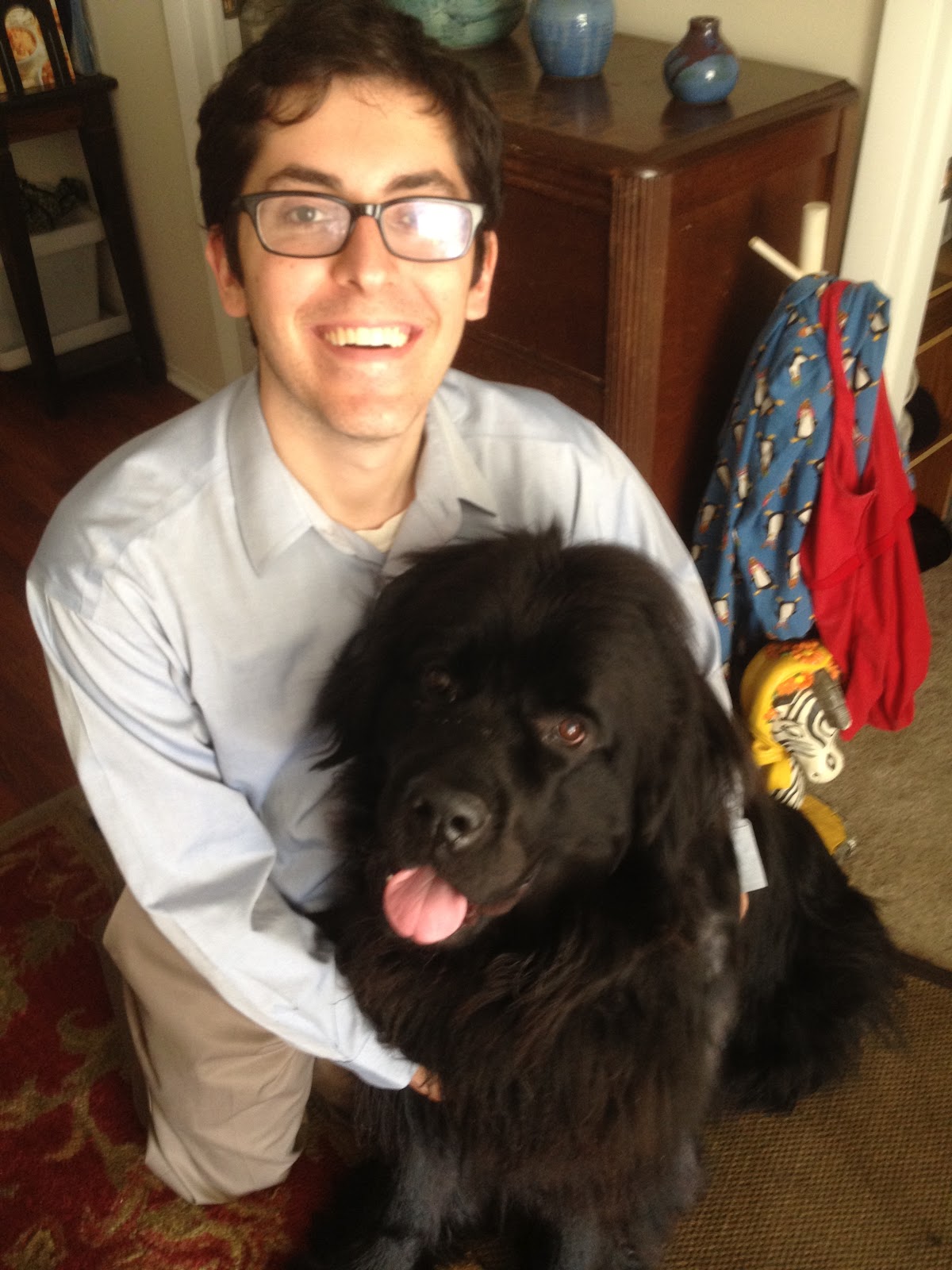
If you want to know why I never joined the Peace Corps, and why I’m not jumping on a flight to Delhi, it’s these guys:
I love travelling, but I love my boys more - and I refuse to see love as a limitation. But I didn’t quite realize how this powerful love factor plays into the Kids Question until I heard the answer come out of my own mouth earlier this summer. Two of our teacher-friends stayed with us over a weekend in June, and they both love dogs. But they’ve hesitated adopting one because they fully intend on travelling the world during their summer vacations. We enjoyed their company of course, but Teddy thought they were the best house-guests ever! They wrestled with him and threw his favorite ball to fetch. They gave him lots of cuddles and pets and loved on him like any dog-lover would. So during one late-night cuddle session, I looked over at them and just had to say what I’d been thinking all along, “I know you want to travel every summer, but you guys should really think about getting a dog. Sure, Teddy keeps me and Ian from doing everything we want to do, and he limits our wanderlust. But it never feels like a limitation because every day with him is an adventure.”
So when it comes to the Kids/India Question, I think I may have answered it in my heart awhile ago. I never joined the Peace Corps because I wanted to stay in Chicago with my Ian. I can’t imagine spending a year abroad now without my Teddy. You might say I’m giving up too much for them. Call me a Romantic, but when you sacrifice for love, it doesn’t really feel like a sacrifice. It just feels like the right decision.
In my book, Love should never be an opportunity cost. So maybe the sleepless nights are worth it after all.
Thursday, July 12, 2012
The Kids Question, Part 1: Where's My Village?
Ian and I celebrated our two-year wedding anniversary on Tuesday. He got me some pretty red and pink gerber daisies, now sitting happily in a white vase on my nightstand, and we ate Chipotle and drank slurpees on the grass watching Sherlock Holmes under the stars at Movies in the Park. Vive l’amour! We also received some well-wishes from friends and family who celebrated our big day with us on 7/10/10. But one of the biggest markers of our 24 months of marital accord happened a couple weeks ago when someone asked us that most casual, yet most significant of questions: “So, when are you guys gonna start having kids?”
Two years into our marriage and eight years into our relationship, this big-little question has started to nudge its way into casual conversations with our friends and family. And the public shift in expectations can be striking: pregnancy has evolved from an aversion to an inevitability.
Not that it’s just our friends and family wondering about our procreative intentions. We’ve been wondering, too. A few days ago I complained to Ian that Kourtney Kardashian named her new daughter Penelope, “I liked that name first!” And just last night, before falling asleep, I said to Ian, “Hey, if we ever have a baby and it’s a girl, what do you think of the name Nina?” To which he quickly responded, “Pinta... you finish.” I sighed, “Santa Maria.”
No Penelope. No Nina.
Sure, I enjoy a good baby-name brainstorming session. And I still have periodic, biochemically-induced dreams about being a parent. But these happy parenting fantasies have run head first into two big walls of parenting reality. First, the popular parenting articles and op-eds that have flooded my News Feed in the past few months. Ann Marie Slaughter’s brilliant piece “Why Women Still Can’t Have It All" bravely confronted the under-discussed challenges motherhood poses to careers, while underscoring the inherently demanding and strenuous nature of parenthood itself.
But a recent New Yorker article wins the gold medal in the Birth Control Games. In “The Case Against Kids: Is Procreation Immoral?” Elizabeth Kolbert references various ethicists and oft-quoted statistics about parenting and happiness (read: unhappiness). This disquieting piece stresses the need to hold the should-we-have-kids question in much higher regard:
These persuasive articles may be haunting my pregnancy dreams, but they’re not the main reason I keep perusing the Family Planning aisle at CVS. Nope. Something else is keeping me from jumping on board the baby train. Something even scarier than over-scheduling and sleep deprivation: that we’d have to do it alone.
You see, none of our close friends have children. A few of them are fiercely devoted to never having kids. All but two of our family members live in other states, and the ones that live here aren’t exactly down the street from us. I may be nervous about pregnancy, giving birth, and generally being wholly responsible for the life of a fragile human child. But most of all, I’m nervous about feeling isolated. Feeling like I’m burdening my family and friends with questions and favors, or just losing friends all together.
Maybe modern parenting is isolated parenting, relative to years past - a murky underbelly of the great American virtue of self-determinism and do-it-yourself-ness that perhaps causes some of stresses discussed in the Slaughter and Kolbert pieces above. And maybe that’s why some couples are choosing to opt out of parenting all together.
If our love of parenting our furry son is any indication, I don’t think we’ll be one of those couples. Until then, I’ll always be pondering the endless enigmas of parenthood. But as I sit here on our comfy couch, snuggled under a summer linen blanket, looking out the window at the frenetic city 20 floors below, I see the busyness of the world that surrounds me. Does it have time for a child, or would a baby be a burden? If it takes a village to raise a child, I can’t help but wonder: where’s my village?
Two years into our marriage and eight years into our relationship, this big-little question has started to nudge its way into casual conversations with our friends and family. And the public shift in expectations can be striking: pregnancy has evolved from an aversion to an inevitability.
Not that it’s just our friends and family wondering about our procreative intentions. We’ve been wondering, too. A few days ago I complained to Ian that Kourtney Kardashian named her new daughter Penelope, “I liked that name first!” And just last night, before falling asleep, I said to Ian, “Hey, if we ever have a baby and it’s a girl, what do you think of the name Nina?” To which he quickly responded, “Pinta... you finish.” I sighed, “Santa Maria.”
No Penelope. No Nina.
Sure, I enjoy a good baby-name brainstorming session. And I still have periodic, biochemically-induced dreams about being a parent. But these happy parenting fantasies have run head first into two big walls of parenting reality. First, the popular parenting articles and op-eds that have flooded my News Feed in the past few months. Ann Marie Slaughter’s brilliant piece “Why Women Still Can’t Have It All" bravely confronted the under-discussed challenges motherhood poses to careers, while underscoring the inherently demanding and strenuous nature of parenthood itself.
But a recent New Yorker article wins the gold medal in the Birth Control Games. In “The Case Against Kids: Is Procreation Immoral?” Elizabeth Kolbert references various ethicists and oft-quoted statistics about parenting and happiness (read: unhappiness). This disquieting piece stresses the need to hold the should-we-have-kids question in much higher regard:
Whatever you may think of Overall’s and Benatar’s conclusions, it’s hard to argue with their insistence that the decision to have a child is an ethical one. When we set the size of our families, we are, each in our own small way, determining how the world of the future will look. And we’re doing this not just for ourselves and our own children; we’re doing it for everyone else’s children, too.
These persuasive articles may be haunting my pregnancy dreams, but they’re not the main reason I keep perusing the Family Planning aisle at CVS. Nope. Something else is keeping me from jumping on board the baby train. Something even scarier than over-scheduling and sleep deprivation: that we’d have to do it alone.
You see, none of our close friends have children. A few of them are fiercely devoted to never having kids. All but two of our family members live in other states, and the ones that live here aren’t exactly down the street from us. I may be nervous about pregnancy, giving birth, and generally being wholly responsible for the life of a fragile human child. But most of all, I’m nervous about feeling isolated. Feeling like I’m burdening my family and friends with questions and favors, or just losing friends all together.
Maybe modern parenting is isolated parenting, relative to years past - a murky underbelly of the great American virtue of self-determinism and do-it-yourself-ness that perhaps causes some of stresses discussed in the Slaughter and Kolbert pieces above. And maybe that’s why some couples are choosing to opt out of parenting all together.
If our love of parenting our furry son is any indication, I don’t think we’ll be one of those couples. Until then, I’ll always be pondering the endless enigmas of parenthood. But as I sit here on our comfy couch, snuggled under a summer linen blanket, looking out the window at the frenetic city 20 floors below, I see the busyness of the world that surrounds me. Does it have time for a child, or would a baby be a burden? If it takes a village to raise a child, I can’t help but wonder: where’s my village?
Wednesday, May 23, 2012
Home Is Where The Heart Is
A year ago we moved from Chicago to my hometown in Indiana. A few weeks ago, we moved back. Instead of walking outside at night to the sound of crickets and the bright yellow flicker of lightning bugs, I now walk outside to the loud rumbling of El trains and the orange glow of street lamps. Golden cornfields and green trees have given way to a lively cityscape of gray sidewalks and angular buildings jutting toward the sky. We traded the 2nd floor for the 20th; car-rides for walking; and friendly neighborhood policemen for baton-wielding riot police during the NATO Summit. It’s good to be back.
I love Chicago. I love it for everything that makes it unique to the world like the lakefront, deep dish pizza, and ‘Da Bears. But most of all I love it because of the many happy memories and important life moments that Ian and I have shared together in this city. We leased our first apartment in Hyde Park, Ian proposed to me at a Lincoln Park florist, we got married in the Gold Coast, and we brought puppy Teddy home during the winter that featured the famous Lake Shore Drive-closing blizzard of 2011. So when I was packing up our boxes for our Chicago-to-Indiana move last year, I expressed some bittersweet concern to my aunt about leaving the city that had meant so much to us. I told her, “We’re both really excited to move to Indy, but I think it might be hard to drive south on Lake Shore Drive one last time in May,” to which she predicted, “I’m sure there will be some tears.”
Chalk it up to moving stress and U-Haul adrenaline, but I didn’t shed any tears the day we moved to Indiana. We put on our business faces, plopped our belongings into our 2nd-floor walk up, and happily began our year-long adventure as Indianapolis suburbanites. Little did we know how meaningful that year would be.
Admittedly, walking around my old hometown last year sometimes felt a little bit...weird. Every street corner had a memory to share, and even the brand-new buildings stood as glaring reminders of what used to be there - an indelible reminder that the only constant in life is Change. And when I saw movies at my hometown theater with Ian or went on day trips to go apple picking or antique shopping, I felt my nostalgic childhood memories of those places give way to new, seemingly-less meaningful ones. As if my adult memories are less worthy than those of my childhood.
Even though living in my hometown sometimes felt a little weird, I loved living near my family. Childhood with my family was certainly a special time, but last year was, too. We planted a garden with my parents, dared them to go vegan with us for a month, rooted for the high school football team together, and accompanied my aunt every Tuesday for her chemotherapy treatments. All of these experiences fought a hard battle against the prospect of moving back to Chicago earlier this Spring. Ultimately, Chicago won.
After only a year away, moving back to Chicago was going to be easy. We hired movers this time (whose presence on this earth I now consider to be a precious gift from 6lb 8oz Baby Jesus), and on May 3rd they arrived on time and hauled everything into their truck with frightening efficiency. I loaded a few things into the back of our car, and fetched Teddy with those unfailable words “Wanna go for ride?” - except I added “to Chicago?” to the end. He hopped right in and we set off to meet the big truck in the big city.
As I left my apartment and turned down State Road 32, next to the newly planted cornfields and below the clear blue sky, Teddy poked his head out the side window enjoying the sunshine and the warm Indiana air. I put on my sunglasses and changed the radio station to a local favorite for the last time. As I looked in the rearview mirror at my hometown in the reflection, I felt the sharp pang of bittersweetness at leaving it behind me for the second time in my life. And my aunt’s prediction came true, just one year late.
I love Chicago. I love Indiana. When your heart is in two places, maybe home is, too.
I love Chicago. I love it for everything that makes it unique to the world like the lakefront, deep dish pizza, and ‘Da Bears. But most of all I love it because of the many happy memories and important life moments that Ian and I have shared together in this city. We leased our first apartment in Hyde Park, Ian proposed to me at a Lincoln Park florist, we got married in the Gold Coast, and we brought puppy Teddy home during the winter that featured the famous Lake Shore Drive-closing blizzard of 2011. So when I was packing up our boxes for our Chicago-to-Indiana move last year, I expressed some bittersweet concern to my aunt about leaving the city that had meant so much to us. I told her, “We’re both really excited to move to Indy, but I think it might be hard to drive south on Lake Shore Drive one last time in May,” to which she predicted, “I’m sure there will be some tears.”
Chalk it up to moving stress and U-Haul adrenaline, but I didn’t shed any tears the day we moved to Indiana. We put on our business faces, plopped our belongings into our 2nd-floor walk up, and happily began our year-long adventure as Indianapolis suburbanites. Little did we know how meaningful that year would be.
Admittedly, walking around my old hometown last year sometimes felt a little bit...weird. Every street corner had a memory to share, and even the brand-new buildings stood as glaring reminders of what used to be there - an indelible reminder that the only constant in life is Change. And when I saw movies at my hometown theater with Ian or went on day trips to go apple picking or antique shopping, I felt my nostalgic childhood memories of those places give way to new, seemingly-less meaningful ones. As if my adult memories are less worthy than those of my childhood.
Even though living in my hometown sometimes felt a little weird, I loved living near my family. Childhood with my family was certainly a special time, but last year was, too. We planted a garden with my parents, dared them to go vegan with us for a month, rooted for the high school football team together, and accompanied my aunt every Tuesday for her chemotherapy treatments. All of these experiences fought a hard battle against the prospect of moving back to Chicago earlier this Spring. Ultimately, Chicago won.
After only a year away, moving back to Chicago was going to be easy. We hired movers this time (whose presence on this earth I now consider to be a precious gift from 6lb 8oz Baby Jesus), and on May 3rd they arrived on time and hauled everything into their truck with frightening efficiency. I loaded a few things into the back of our car, and fetched Teddy with those unfailable words “Wanna go for ride?” - except I added “to Chicago?” to the end. He hopped right in and we set off to meet the big truck in the big city.
As I left my apartment and turned down State Road 32, next to the newly planted cornfields and below the clear blue sky, Teddy poked his head out the side window enjoying the sunshine and the warm Indiana air. I put on my sunglasses and changed the radio station to a local favorite for the last time. As I looked in the rearview mirror at my hometown in the reflection, I felt the sharp pang of bittersweetness at leaving it behind me for the second time in my life. And my aunt’s prediction came true, just one year late.
I love Chicago. I love Indiana. When your heart is in two places, maybe home is, too.
Subscribe to:
Posts (Atom)